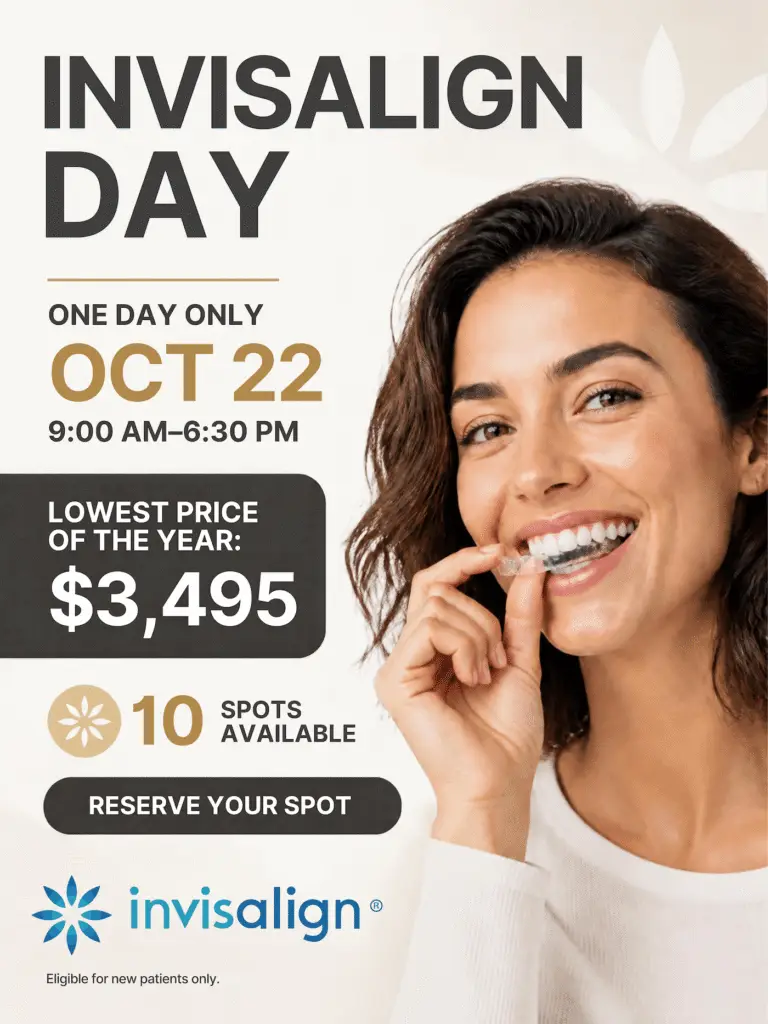

Have you ever looked at your smile and wondered whether you missed your opportunity to straighten your teeth? Many adults assume orthodontic treatment is mainly for teenagers. However, healthy teeth can often be moved at almost any age, which means adulthood does not automatically prevent you from improving your alignment.
For adults who prefer a discreet and flexible option, Invisalign in Westbury may provide an appealing alternative to traditional braces. The clear aligners are designed around your teeth, your bite, and your treatment goals. In addition, they can be removed for meals, brushing, flossing, and important events.
At Smile On Westbury, we help adults throughout Westbury and nearby Nassau County communities understand whether clear aligner treatment fits their needs. A consultation allows the dentist to examine your teeth, assess your bite, and explain what Invisalign may realistically accomplish.
Why More Adults Are Considering Invisalign
Adults seek orthodontic care for many different reasons. Some had braces when they were younger but noticed their teeth shifting after they stopped wearing a retainer. Others never had the opportunity to complete treatment. Meanwhile, some patients begin thinking about alignment after experiencing changes in their bite or difficulty cleaning crowded areas.
Invisalign uses a planned series of clear, removable trays. Each set applies controlled pressure to guide selected teeth toward new positions. Patients generally progress through their aligners according to the schedule provided by their dentist. However, the exact treatment timeline depends on the starting position of the teeth, the complexity of the bite, and how consistently the aligners are worn.
The discreet appearance is one of the best-known reasons adults choose Invisalign. Because the trays are transparent, they tend to be less noticeable than metal brackets and wires. This can be especially helpful for patients who regularly attend meetings, work with customers, speak in public, or simply prefer a more subtle treatment.
Convenience also plays an important role. Invisalign aligners can be removed before eating, so there are usually fewer food restrictions than there are with fixed braces. You can continue enjoying many of your usual meals as long as you remove the trays and clean your teeth before putting them back in.
Dental Concerns Invisalign May Address
Clear aligner treatment is not limited to one type of alignment concern. Depending on the individual case, Invisalign may be used to improve crowded teeth, unwanted spacing, mild rotations, and certain bite problems. However, not every orthodontic concern can be treated in the same way, and some complex cases may require additional techniques.
Crowded Teeth
Crowding occurs when the jaw does not have enough room for the teeth to sit in balanced positions. As a result, teeth may overlap, rotate, or emerge outside the ideal dental arch. Crowded areas can also create narrow spaces that are harder to reach with a toothbrush or floss.
In appropriate cases, Invisalign can gradually create a more organized arrangement. The treatment plan may involve moving individual teeth, reshaping tiny contact areas, or creating space through carefully selected methods. Your dentist will explain which approach is appropriate before treatment begins.
Spaces Between Teeth
Small gaps may occur because of tooth size, jaw development, missing teeth, or natural spacing patterns. While some people are comfortable with these spaces, others prefer a more even appearance. Food may also become trapped in certain gaps, which can make cleaning more important.
Clear aligners may help close selected spaces by guiding neighboring teeth toward planned positions. Nevertheless, the cause of the spacing must be considered. For example, a space related to a missing tooth may require a broader restorative plan rather than orthodontic movement alone.
Bite Alignment
Your bite describes how the upper and lower teeth come together. Some patients have an overbite, underbite, crossbite, or open bite. These patterns can influence chewing, tooth wear, and how pressure is distributed across the teeth.
Invisalign may improve certain bite concerns, particularly when treatment is carefully planned and monitored. However, bite correction can be more complex than straightening a few visible teeth. Therefore, a comprehensive examination is essential before deciding whether clear aligners are the right solution.
Benefits of Invisalign for Adults
- Discreet appearance: Clear trays are designed to be subtle during conversations, photographs, meetings, and everyday activities.
- Removable design: Aligners can be taken out for meals, brushing, flossing, and special occasions.
- Fewer food restrictions: Because the trays are removed while eating, patients generally do not need to avoid foods solely because of brackets or wires.
- Easier daily cleaning: Patients can brush and floss without fixed orthodontic hardware covering parts of the teeth.
- Customized planning: Each aligner series is developed according to the patient’s starting alignment and treatment goals.
- Comfortable edges: Smooth aligner material may feel less irritating to the cheeks than traditional metal components.
- Progress monitoring: Scheduled visits allow the dentist to evaluate movement and adjust the plan when necessary.
- Potential oral health support: Better alignment may make crowded areas easier to clean and maintain.
What Happens During an Invisalign Consultation?
Your first Invisalign visit is an opportunity to learn, not a commitment to treatment. The dentist will examine your teeth, gums, jaw relationship, and bite. Digital photographs, scans, and dental X-rays may also be recommended to provide a more complete view.
The dentist will ask what you would like to change and whether you have concerns about comfort, timing, cost, or appearance. This conversation matters because orthodontic treatment should address more than what is visible in a mirror. It should also support a stable and functional bite.
If Invisalign appears appropriate, digital planning technology can be used to map the proposed movement of your teeth. Your aligners are then created for your specific plan. When they are ready, the dental team will explain how to insert, remove, clean, and store them.
Small tooth-colored attachments may sometimes be placed on selected teeth. These attachments give the aligners additional grip so they can guide movement more effectively. Although they may be slightly visible at close range, they are designed to blend with the teeth.
How Long Does Invisalign Treatment Take?
There is no single timeline that applies to every adult. A limited alignment concern may require fewer months, while a more involved bite correction can take considerably longer. Your estimated timeline will be based on the amount and type of movement required.
Consistency is one of the most important factors. Aligners can only move the teeth while they are being worn. Therefore, patients are generally instructed to keep them in place for most of the day and night, removing them mainly for meals and oral hygiene.
Skipping aligners, leaving them out for extended periods, or moving to the next set too early can interfere with planned movement. Meanwhile, wearing the trays as directed helps treatment progress more predictably. Regular appointments also allow the dentist to make sure each stage remains on track.
Living With Clear Aligners
Most patients need a brief adjustment period when they begin Invisalign. The aligners may initially feel snug, and speech may sound slightly different for a short time. However, many adults adapt as they continue wearing the trays.
It is normal to experience pressure when switching to a new aligner. This sensation generally reflects the gentle force used to move the teeth. Significant pain, a sharp edge, or an aligner that does not fit properly should be reported to the dental office.
Aligners should be rinsed and cleaned according to the instructions provided by your dentist. Hot water should be avoided because it can distort the material. In addition, trays should be placed in their case when they are not being worn. Wrapping them in a napkin can make them easy to lose or accidentally discard.
Oral hygiene remains important throughout treatment. Brush after meals when possible, floss daily, and attend routine preventive visits. Putting aligners over food particles can contribute to unwanted odors and may expose the teeth to sugars or acids for longer periods.
Will You Need a Retainer After Invisalign?
Yes, retainers are an important part of preserving orthodontic results. Teeth naturally have a tendency to shift throughout life. After active Invisalign treatment, the tissues surrounding the teeth also need time to adapt to their new positions.
Your dentist will provide instructions for retainer wear based on your case. Initially, more frequent wear may be recommended. Later, many patients transition to nighttime use. Following the retainer schedule helps protect the time and effort invested in treatment.
A damaged, lost, or poorly fitting retainer should be addressed promptly. Waiting too long may allow noticeable movement to occur. Therefore, contact the dental office when you first recognize a problem rather than waiting until the teeth have shifted significantly.
Is Invisalign Right for Every Adult?
Invisalign can be an excellent option for many adults, but it is not automatically the best treatment for every person. Active tooth decay, gum inflammation, or untreated oral health concerns may need attention before orthodontic movement begins. Healthy supporting tissues create a better foundation for treatment.
Some complex tooth movements may also require a different orthodontic approach or coordination with another dental specialist. Additionally, clear aligners require personal responsibility. Patients who frequently remove or misplace their trays may not achieve the planned results as efficiently.
The most reliable way to determine your candidacy is through an in-person evaluation. Rather than relying on a general online description, you can receive recommendations based on your teeth, your bite, and your goals.
A Clearer Path Toward Your Smile Goals
Choosing orthodontic care as an adult is not about following a trend or meeting someone else’s expectations. It is about deciding whether improved alignment, easier cleaning, or a more balanced bite would be meaningful to you.
Invisalign offers a discreet, removable, and personalized way to approach tooth movement. Moreover, professional planning and monitoring help ensure that treatment considers both appearance and dental function.
Ready to learn whether clear aligners fit your goals? Contact Smile On Westbury at (516) 272-4950 to schedule a consultation at our Westbury office.