
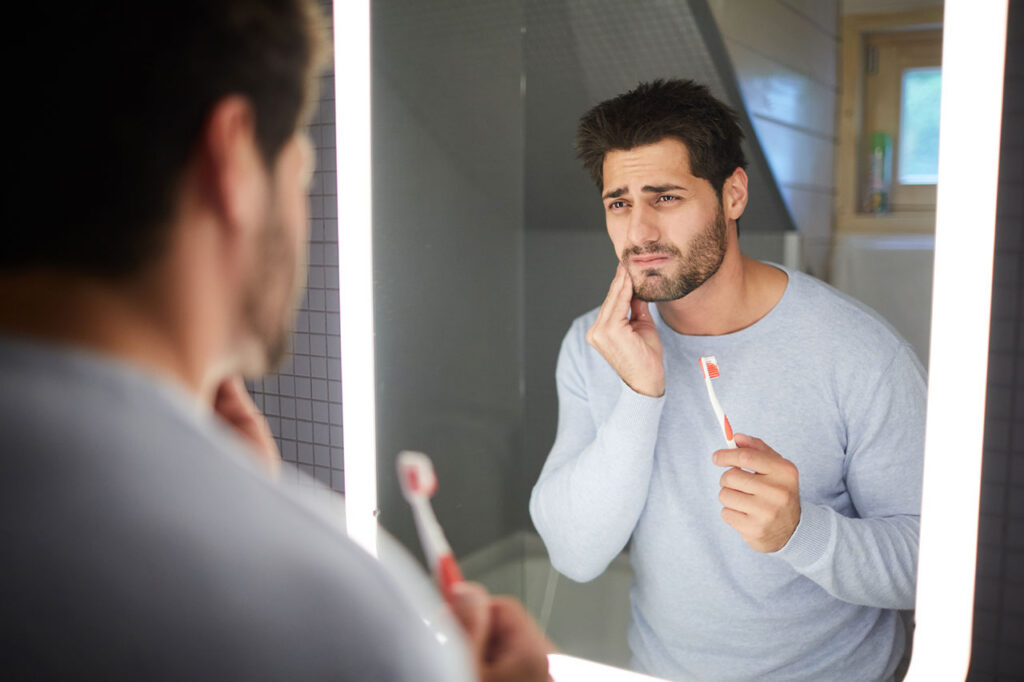
Does your jaw feel tired after eating, talking, or waking in the morning? Jaw discomfort is easy to dismiss when it appears only occasionally. However, repeated clicking, facial tension, headaches, or difficulty opening the mouth may indicate that the jaw joints and surrounding muscles are under stress.
Because jaw pain can have several possible causes, treatment should begin with a careful dental evaluation. At Smile On Westbury, patients seeking TMJ treatment in Westbury can receive an assessment of their bite, tooth wear, jaw movement, muscle tenderness, dental history, and daily habits.
The temporomandibular joints are complex structures that allow the lower jaw to move during chewing, speaking, yawning, and swallowing. When the joints or nearby muscles become irritated, the resulting symptoms are often described as temporomandibular disorders, or TMD.
What Is the TMJ?
TMJ stands for temporomandibular joint. There is one joint on each side of the head, located just in front of the ears.
Each joint connects the lower jaw to the skull. A small disc helps cushion movement as the jaw rotates and slides. Muscles, ligaments, nerves, and surrounding tissues work together to guide motion.
Because the jaw moves in several directions, the TMJ is more complex than a simple hinge. It must coordinate opening, closing, side-to-side movement, and forward motion.
Symptoms can develop when the muscles become overworked, the disc changes position, the joint becomes inflamed, or the teeth and bite create uneven pressure. However, the exact cause is not always obvious.
Common Symptoms of a TMJ Disorder
Jaw pain is one of the most recognizable symptoms, but TMD can affect several areas of the face and head.
Patients may experience clicking, popping, or grinding sounds when opening and closing. A sound without pain or limited movement does not always require treatment. Nevertheless, a new or worsening sound should be mentioned during a dental visit.
Muscle tenderness may occur along the cheeks, temples, jawline, or neck. Some patients wake with facial fatigue or headaches, especially when they clench or grind during sleep.
The jaw may feel stiff, catch temporarily, or become difficult to open fully. In more advanced cases, it may lock in an open or closed position.
Other possible concerns include ear-area discomfort, pain while chewing, tooth sensitivity, worn enamel, and a bite that suddenly feels different.
What Causes Jaw Pain and TMJ Symptoms?
TMD is often influenced by more than one factor. Muscle overuse, joint inflammation, bite changes, trauma, stress, and oral habits may all contribute.
Clenching and Grinding
Clenching means pressing the teeth together, while grinding involves sliding them against each other. These habits may occur during sleep or while concentrating, driving, exercising, or responding to stress.
Repeated muscle activity can cause fatigue and tenderness. It may also wear or fracture teeth and place pressure on dental restorations.
Joint or Disc Changes
The cushioning disc inside the joint can move out of its ideal position. This may contribute to clicking, catching, or restricted movement.
Arthritis and other joint conditions can also affect the TMJ, leading to stiffness, inflammation, or changes in motion.
Injury
A blow to the face, sports injury, fall, or vehicle accident can affect the jaw joints and surrounding tissues. In addition, prolonged mouth opening during a procedure or event may temporarily strain the muscles.
Daily Habits
Chewing gum for long periods, biting fingernails, holding objects between the teeth, or frequently eating very tough foods can increase jaw muscle activity.
Poor posture may also contribute to muscle tension in the neck, shoulders, and jaw region, particularly during long periods at a computer or phone.
Benefits of TMJ Treatment
- Reduced jaw discomfort: Treatment may calm irritated joints and overworked muscles.
- Improved movement: Addressing inflammation and muscle tension can support more comfortable opening and chewing.
- Protection from grinding: A custom oral appliance may reduce direct contact between the upper and lower teeth.
- Reduced tooth wear: Managing clenching and grinding can help limit continued damage to enamel and restorations.
- Better awareness of triggers: Patients can learn which habits, foods, and activities increase symptoms.
- Personalized care: Treatment can be selected according to joint findings, muscle tenderness, bite, and lifestyle.
- Support for daily comfort: Reduced tension may make eating, speaking, and sleeping feel more manageable.
- Earlier identification of related problems: An examination may reveal cracked teeth, worn fillings, or other concerns associated with excessive pressure.
How Is a TMJ Disorder Diagnosed?
The dentist begins by asking about symptoms, timing, triggers, injuries, dental history, headaches, sleep, and habits. Details such as whether pain is worse in the morning or after meals can help identify patterns.
Next, the dentist observes how the jaw opens and closes. The range and direction of movement may be measured, and the joints may be checked for sounds, tenderness, or irregular motion.
The muscles around the temples, cheeks, jawline, head, and neck may be gently examined. Areas of tenderness can indicate overuse or referred pain.
The teeth and restorations are also evaluated. Flattened edges, small fractures, gum recession, and changes in the bite may provide signs of repeated pressure.
Dental imaging may be recommended when the dentist needs more information about the joints, teeth, roots, or supporting bone. In complex cases, referral to another healthcare professional may be appropriate.
Conservative TMJ Treatment Options
Many TMJ concerns are first managed with conservative care. The goal is to reduce inflammation, relax overworked muscles, protect the teeth, and identify contributing habits.
Temporary Diet Changes
During a flare-up, softer foods can reduce the amount of force and movement required for chewing. Eggs, yogurt, cooked vegetables, pasta, fish, and other easy-to-chew foods may feel more comfortable.
Avoid chewing gum, tough meat, hard candy, and foods that require very wide opening. However, a soft diet should not necessarily be continued indefinitely without professional guidance.
Heat or Cold
Warm compresses may relax tight muscles, while cold packs may help calm a recently irritated area. The dentist can explain which approach is more suitable for the symptom pattern.
Protect the skin by wrapping the pack in a cloth and avoid excessive application time.
Jaw Resting Position
At rest, the lips can touch gently while the teeth remain slightly apart. The tongue may rest lightly against the roof of the mouth.
Patients who keep their teeth together throughout the day can practice checking and relaxing this position. Phone reminders or visual notes may help build awareness.
Medication
Over-the-counter or prescription medication may be considered for selected patients. However, medication choice depends on health history, allergies, other prescriptions, and the likely cause of symptoms.
Patients should follow professional instructions and avoid assuming that a medication is appropriate simply because it is available without a prescription.
How a Custom Night Guard May Help
A custom night guard is an oral appliance designed from a scan or impression of the patient’s teeth. It is generally worn during sleep to create a controlled surface between the upper and lower arches.
The guard does not guarantee that clenching or grinding will stop. However, it can reduce direct tooth-to-tooth contact and help protect enamel, crowns, fillings, and other restorations.
Appliance design matters. An over-the-counter guard may not provide the same fit, durability, or bite control as a professionally planned appliance. In some cases, a poorly fitting guard can increase muscle activity or create unwanted pressure.
The dentist will check the appliance and make adjustments as needed. Patients should also bring the guard to routine dental visits so its fit and wear can be evaluated.
How Stress Can Affect Jaw Tension
Stress does not cause every TMJ disorder, but it can increase muscle tension and clenching. Some patients press their teeth together while working, driving, exercising, or managing difficult situations.
Because these habits may occur unconsciously, awareness is an important part of management. Periodically check whether the jaw is relaxed and whether the teeth are touching without a reason.
Slow breathing, regular movement breaks, improved sleep routines, and stress-management strategies may support muscle relaxation. However, patients should not be told that jaw pain is simply psychological. Physical examination remains necessary.
Can Posture Contribute to Jaw Pain?
Head and neck posture can influence muscle activity around the jaw. Long periods of leaning toward a screen may strain the neck, shoulders, and facial muscles.
Adjust the height of computer monitors, support the lower back, and take regular breaks from static positions. Hold phones closer to eye level rather than bending the head downward for extended periods.
Physical therapy may be appropriate when neck tension, restricted movement, or muscle imbalance contributes to symptoms. A coordinated approach can be helpful when discomfort involves more than the jaw alone.
When Jaw Pain May Be a Dental Emergency
Seek prompt care if the jaw locks open or closed, significant swelling develops, or symptoms follow a major injury. Difficulty breathing or swallowing requires urgent medical attention.
Severe tooth pain, facial swelling, fever, or drainage may indicate a dental infection rather than a primary joint problem. In addition, chest discomfort, shortness of breath, or pain spreading into the jaw can have a medical cause and should not be assumed to be TMD.
Because jaw discomfort can overlap with dental, muscular, joint, and medical conditions, professional evaluation is important when symptoms are severe, persistent, or unusual.
Daily Habits That May Reduce TMJ Flare-Ups
Avoid resting the chin in the hand, which can place uneven pressure on the jaw. In addition, do not cradle a phone between the shoulder and ear.
Limit prolonged gum chewing and avoid biting pens, fingernails, or other objects. Cut large foods into smaller pieces so the mouth does not need to open as widely.
Try to chew on both sides rather than relying on one side consistently. However, do not force chewing on a painful side during an active flare-up.
Maintain routine dental care so damaged teeth, uneven restorations, and other bite-related concerns can be identified. Also, mention morning headaches, tooth wear, or jaw fatigue even when they seem manageable.
How Long Does TMJ Treatment Take?
The timeline depends on the cause and severity of the symptoms. A temporary muscle flare-up may improve with rest and habit changes, while chronic joint or bite concerns may require longer management.
Some patients notice improvement after using a custom appliance consistently. Others benefit from a combination of dental care, physical therapy, medication, behavioral awareness, or specialist evaluation.
Progress may not be perfectly linear. Symptoms can improve and then return during stressful periods, illness, changes in sleep, or increased chewing activity.
Follow-up appointments allow the dentist to assess whether the plan is working and whether modifications are needed.
Find a More Comfortable Way to Move Your Jaw
Jaw clicking, facial tension, and morning soreness should not automatically be ignored. Although occasional symptoms may be temporary, repeated discomfort can affect eating, sleep, concentration, and dental health.
A thorough evaluation can help identify likely triggers and determine whether conservative TMJ treatment, a custom night guard, or coordinated care may be appropriate.
To discuss jaw pain or possible teeth grinding, call Smile On Westbury at (516) 272-4950 and schedule a consultation at our Westbury practice.